







In aesthetically demanding areas, even subtle differences in implant positioning, gum contours, or the relationship between adjacent teeth can significantly influence the final result. Successful implant rehabilitation therefore requires more than precise surgical execution.
What Defines a Natural-Looking Result?
Replacing a single tooth involves several interconnected factors: bone structure, soft-tissue anatomy, the position of neighbouring teeth, and functional loading.
Each of these elements plays an important role in planning both the surgical and prosthetic phases of treatment.
At Center Hočevar, particular attention is given to the relationship between the implant and its surrounding tissues. Our objective is to establish the conditions for stable function and an aesthetically harmonious restoration that respects each patient's natural dental anatomy.
Looking Beyond the Visible Result
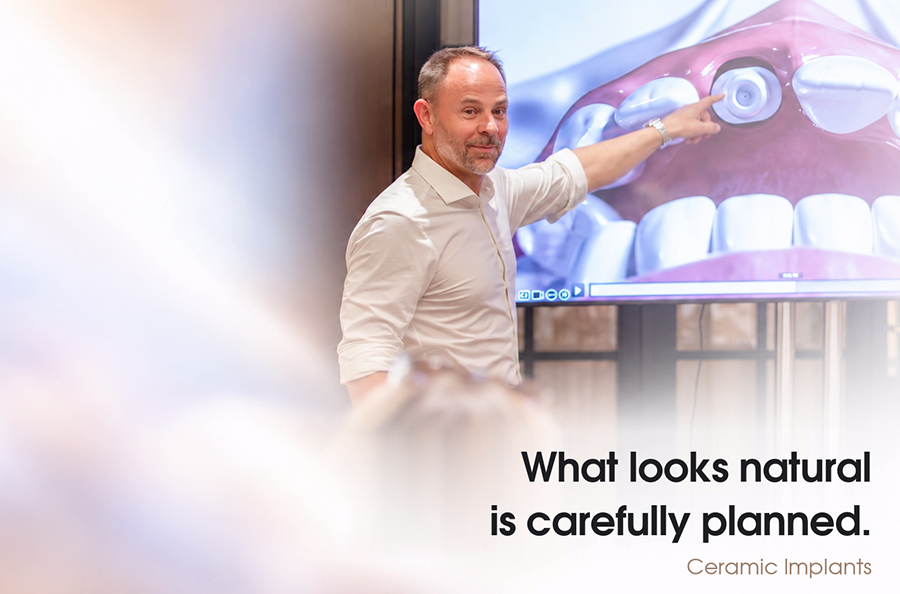
This clinical case highlights the importance of coordination between surgical treatment and the final prosthetic restoration.
Aesthetic appearance matters, but it is not the only measure of treatment quality. Accessibility for oral hygiene, peri-implant tissue health, and appropriate distribution of chewing forces are equally important considerations.
At Center Hočevar, implant rehabilitation is therefore approached as a comprehensive treatment process, with a focus on both functional performance and the health of the surrounding tissues.